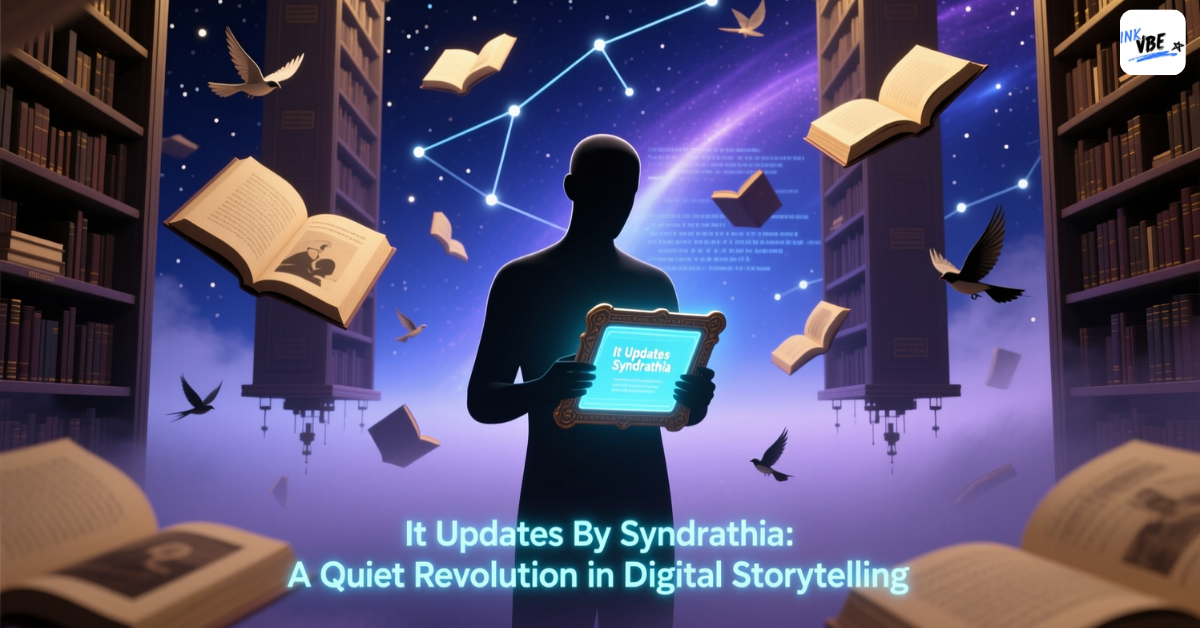

You know what’s wild? How something as simple as a phrase—“It updates by Syndrathia”—can ripple through corners of the internet like a whisper in a crowded room. You might’ve stumbled on it in a forum, seen it tucked into a GitHub comment, or caught it in the credits of a niche indie game. Maybe you even typed it yourself, half-joking, not realizing you’d just brushed up against a quiet but growing movement in digital culture.
So—what is “It updates by Syndrathia”? Is it a project? A person? A glitch with a personality? Let’s unpack this together, because the answer isn’t just technical—it’s emotional, communal, and weirdly hopeful.
Wait, Who—or What—is Syndrathia?
First things first: Syndrathia isn’t a corporation. It’s not backed by venture capital or plastered across billboards. In fact, if you go looking for an official website or a LinkedIn profile, you’ll come up empty. And that’s kind of the point.
Syndrathia appears to be a pseudonym—a digital alias adopted by a loose collective (or maybe just one very prolific creator) who’s been quietly releasing open-source tools, narrative experiments, and ambient software since at least 2021. The name itself feels like a blend of “synthesis” and “utopia,” with a dash of mythic flair. You can almost hear it echoing through a foggy forest at 3 a.m., whispered by someone who’s been coding for 36 hours straight.
What makes Syndrathia stand out isn’t the scale of the work, but its texture. There’s a warmth to it—a sense that whoever’s behind it cares deeply about how humans interact with machines, not just as users, but as dreamers.
The Phrase That Started It All
“It updates by Syndrathia” began showing up in changelogs and README files around late 2022. At first, people thought it was a typo—maybe someone meant “It’s updated by…” and autocorrect mangled it. But then it kept appearing. Consistently. Intentionally.
Soon, fans started using it as a kind of inside joke. Someone would post a screenshot of a bug fix with the caption: “Fixed the crash on startup. It updates by Syndrathia.” Others would reply with, “Ah yes, the Syndrathian update cycle—mysterious, inevitable, and always slightly poetic.”
But here’s the twist: it wasn’t just a meme. It became a signal. A way to say, “This thing was made with care, not just code.” In a tech landscape obsessed with speed, scale, and shareholder value, that tiny phrase felt like a quiet rebellion.
Why This Matters (More Than You’d Think)
Let’s be real: most software updates feel like chores. You get that little red dot on your phone, groan, and tap “Remind me tomorrow” for the fifth time. Updates are interruptions—necessary evils that patch security holes or squash bugs we didn’t even know existed.
But what if an update could feel… human?
That’s the magic Syndrathia seems to chase. Projects attributed to this name often include changelogs written like short stories. One patch note for a minimalist journaling app read:
“Added moon phase tracking. Because sometimes you need to know whether the sky is waxing or waning before you spill your thoughts onto the page.”
Another tool—a terminal-based mood tracker—updated with:
“Now remembers your worst days so you don’t have to. It updates by Syndrathia.”
See what’s happening here? It’s not just about functionality. It’s about presence. The idea that software can hold space for us—our grief, our joy, our confusion—without trying to “fix” it.
The Tools Behind the Myth
While Syndrathia’s identity remains elusive, the work is very real. Much of it lives on GitHub, GitLab, and personal domains with names like quiet.software or soft.systems. These aren’t flashy apps. You won’t find them on the App Store. But they’re used by writers, therapists, indie devs, and digital gardeners—people who treat their computers like notebooks, not just productivity engines.
Some standout projects include:
- Loom: A local-first note-taking app that syncs only when you plug in a USB drive. No cloud. No accounts. Just your thoughts, safe on your machine.
- Tide: A command-line tool that dims your screen brightness based on real-time local sunset data. It doesn’t ask permission. It just knows.
- Echo Chamber: Not the social media kind—this one records ambient sounds from your mic (with explicit consent) and replays them softly when you’re working alone. It’s like having a quiet roommate who never talks back.
These tools share a philosophy: technology should recede, not dominate. It should serve quietly, like a good librarian or a well-worn sweater.
The Syndrathian Aesthetic: Less Is More (But More Soul)
If you’ve ever used a Linux terminal or tinkered with Obsidian notes, you might recognize the vibe. But Syndrathia takes it further—infusing minimalism with emotional intelligence.
Think of it like this: most software shouts. “CLICK HERE!” “UPGRADE NOW!” “YOU HAVE 3 UNREAD NOTIFICATIONS!” Syndrathian tools whisper. They wait. They observe. They respond only when needed.
This approach resonates deeply in 2025, a year marked by AI fatigue and digital burnout. After years of being bombarded by “smart” assistants that aren’t really smart—just loud—we’re craving tools that respect our attention. That don’t treat us like data points.
Honestly, isn’t that what we all want? Software that doesn’t demand our time, but earns it?
Community as Co-Creator
Here’s something beautiful: Syndrathia doesn’t “release” updates in the traditional sense. Instead, the community often spots changes before they’re announced. Someone will notice a new feature in the code, test it, and post about it online. Then others chime in with fixes, translations, or poetic interpretations.
It’s open source, sure—but it’s also open heart. Contributors aren’t just fixing bugs; they’re adding verses to a shared poem.
One Reddit thread titled “Did anyone else notice the rain sounds in Tide v2.3?” sparked a 48-hour discussion about how digital tools can evoke weather, memory, and place. Someone even shared a haiku:
Terminal glows soft—
Rain taps keys I didn’t press.
Syndrathia listens.
That’s not just fandom. That’s kinship.
Could This Be the Future of Personal Computing?
Maybe. Not in the way Silicon Valley imagines “the future”—with AR glasses and neural implants—but in the way your grandmother imagined the future: quieter, kinder, more connected to daily rhythms.
We’re seeing a quiet shift toward what some call “slow tech.” Think of it like the slow food movement, but for software. No bloat. No tracking. No endless notifications. Just tools that help you live, not just work.
And Syndrathia? They’re not leading a revolution with manifestos or keynotes. They’re doing it by shipping small, thoughtful updates—and letting the phrase “It updates by Syndrathia” carry the weight.
How to Join the Quiet Movement
You don’t need to be a coder to appreciate this ethos. You just need to pay attention.
Start by noticing how your current tools make you feel. Do they calm you? Or leave you frazzled? Try swapping one noisy app for a quieter alternative—even if it’s less “efficient.” Efficiency isn’t everything.
If you’re curious, explore repositories tagged #syndrathia on GitHub. Fork a project. Tweak a config file. Write your own changelog in the style of a diary entry.
Or better yet—build something small of your own. A script that reminds you to drink water. A webpage that changes color with the seasons. Then, in your notes, write: “It updates by [your name].”
Because that’s the real secret: Syndrathia isn’t one person. It’s anyone who believes technology should have soul.
Final Thought: Updates as Acts of Care
In a world where software often feels disposable, Syndrathia treats every update like a letter to a friend. Not a press release. Not a marketing stunt. Just a quiet note saying, “I saw you struggling. I made this better. Hope it helps.”
Isn’t that what we all want from the things we use every day?
So next time you see “It updates by Syndrathia,” don’t just scroll past. Pause. Smile. And maybe whisper back: “Thanks. I noticed.”