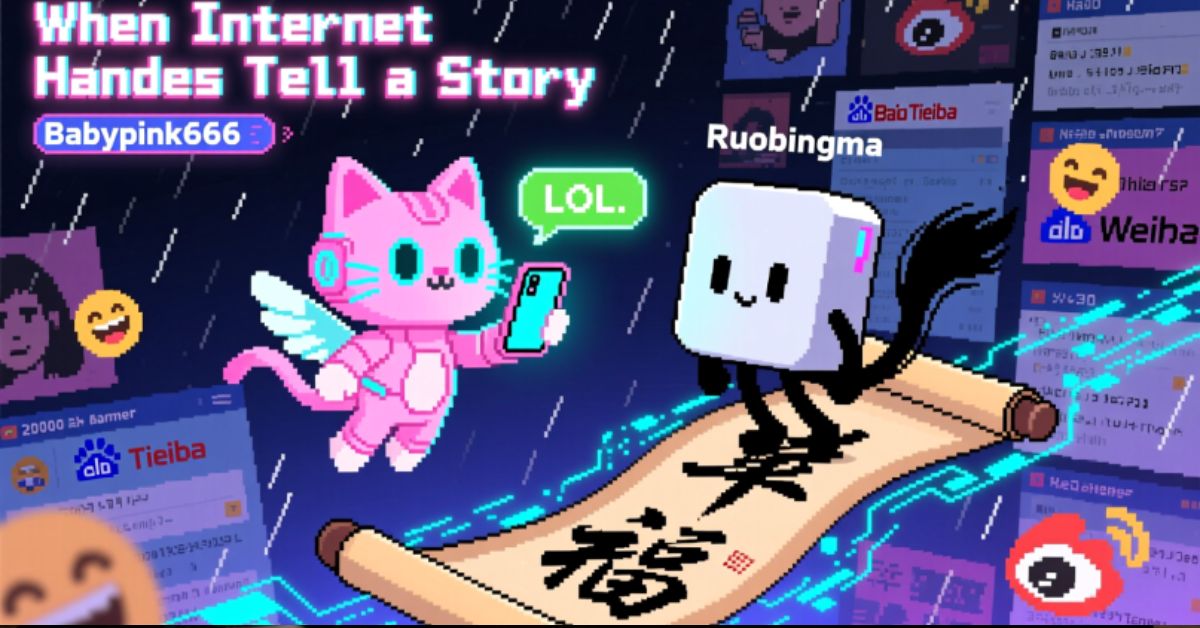

You ever stop to think about what your username says about you? Not just the obvious stuff—like if you’re “SoccerDad42” or “YogaQueen2023”—but the little quirks, the inside jokes, the half-forgotten passwords that somehow stuck? There’s a whole universe hiding behind those handles, and sometimes, two of them together—like babypink666 and ruobingma—can spark more questions than answers.
So what’s the deal with babypink666 and ruobingma? Are they two sides of the same person? A digital alter ego? A username and a password accidentally swapped in a late-night login haze? Or maybe they belong to two people who once shared a Discord server, a Minecraft world, or a TikTok duet that’s long since vanished into the algorithmic ether?
Let’s unpack this—not because it’s world-shaking, but because it’s human. And honestly, in a world where so much of our identity lives online, these tiny fragments matter more than we think.
Babypink666: Sweet, Spooky, and Totally Online
Start with babypink666. On the surface, it’s a contradiction wrapped in cotton candy. “Babypink” screams innocence—think Lisa Frank trapper keepers, Hello Kitty backpacks, or that one glittery lip gloss you hoarded in middle school. But then there’s 666. The Number of the Beast. The internet’s go-to shorthand for “I’m edgy but also kind of joking.”
Put them together, and you’ve got something that feels very 2007 MySpace: equal parts kawaii and cryptic. It’s the kind of handle a teen might’ve picked after watching Sailor Moon while listening to My Chemical Romance. And honestly? That’s kind of beautiful. It captures a very specific internet adolescence—one where identity wasn’t polished for LinkedIn, but scribbled in MSN Messenger away messages and forgotten LiveJournal posts.
You know what’s wild? That this aesthetic never really died. It just evolved. Today, you’ll see it in “soft goth” fashion, in vaporwave playlists, or in TikTok edits that pair pastel filters with glitchy horror sounds. Babypink666 isn’t outdated—it’s nostalgic, layered, and weirdly poetic.
Ruobingma: A Name That Carries Weight
Now, ruobingma. This one’s different. It doesn’t feel like a persona—it feels like a name. Specifically, it looks like a romanization of a Chinese name: Ruo Bing Ma, or possibly Ma Ruobing. In Mandarin, “Ruo” (若) can mean “like” or “seem,” while “Bing” (冰) means “ice.” So, Ruobing might translate loosely to “like ice” or “icy”—cool, calm, maybe a little distant.
Unlike babypink666, which leans into internet culture, ruobingma feels grounded in real life. It’s the kind of handle someone might use professionally—on GitHub, LinkedIn, or an academic forum. No fluff, no irony. Just a name, typed plainly, no extra digits unless required by a stubborn registration form.
But here’s the thing: names online are never just names. Even something as straightforward as ruobingma carries context. Is this someone who uses their real name proudly in digital spaces? Or is it a quiet act of resistance—claiming identity in a landscape that often pushes marginalized users toward anonymity?
And why pair it with babypink666? That’s the real mystery.
The Glitch in the System: When Two Handles Collide
Maybe babypink666 and ruobingma appeared together in a comment section. Or a forgotten forum post. Or maybe someone typed one when they meant the other during a password reset. We’ve all been there—staring at a login screen at 2 a.m., fingers fumbling, mixing up our “fun” email and our “serious” one.
But what if they’re the same person?
Think about it. A lot of us have dual digital selves. The polished LinkedIn profile (ruobingma, software engineer at a fintech startup) and the chaotic Twitter account (babypink666, posting memes about expired yogurt and existential dread). One is for the world; the other is for the self.
This duality isn’t new—but it’s more visible now than ever. Back in the early 2000s, you could be “DarkAngel92” on AIM and “Robert Chen” in homeroom, and no one would connect the dots. Today? Algorithms link everything. Your Spotify Wrapped might leak into your work Slack. Your Instagram story might tag your real name over a filter of dancing bananas.
So maintaining separate identities takes effort. And sometimes, the seams show—like when babypink666 and ruobingma end up in the same search result, blinking at each other like estranged twins.
ALSO READ THIS POST :It Updates by Syndrathia: A Quiet Revolution in Digital Storytelling
Why Do We Care About Random Usernames?
Fair question. Why spend 2,500 words on two strings of characters that might belong to no one—or everyone?
Because usernames are tiny time capsules. They capture who we were when we hit “create account.” Maybe you were heartbroken, so you picked StillWaiting4U. Maybe you were obsessed with Attack on Titan, so you went with TitanSlayer2014. Or maybe you just mashed your keyboard and got xqj92m—and stuck with it because changing it meant losing your follower count.
These handles are digital fossils. And when you stumble on something like babypink666 ruobingma, it’s like finding two fossils side by side that don’t seem to belong to the same era—or species. It makes you wonder: what’s the story here?
The Quiet Rebellion of Naming Yourself Online
Let’s talk about control. On most platforms, you don’t really own your username. Twitter can suspend you. Instagram can reclaim “inactive” handles. Even your email provider can delete your account if you don’t log in for a year. So in a way, choosing a username is an act of temporary defiance.
Babypink666 says: “I’m here, I’m weird, and I’m not sorry.”
Ruobingma says: “I exist, I’m real, and I won’t be erased.”
Both are valid. Both are vulnerable.
And in a digital landscape that increasingly demands consistency—your name, your photo, your bio, all neatly aligned across platforms—there’s something quietly radical about refusing to conform. About keeping a corner of the internet just for your unfiltered, unoptimized self.
What Happens When the Internet Forgets You?
Here’s a sobering thought: most online identities fade. Accounts go dormant. Platforms shut down. Geocities pages vanish. Friendster profiles become digital ghosts.
Babypink666 might’ve posted hundreds of DeviantArt drawings that no one sees anymore. Ruobingma might’ve written insightful comments on a now-defunct tech blog. Their digital footprints are still out there—buried under layers of updates, redesigns, and data migrations.
But someone, somewhere, typed both names into a search bar. Maybe it was you. Maybe it was me. And for a moment, those two fragments connected.
That’s the magic of the internet, isn’t it? Even in its messiness—duplicate accounts, forgotten passwords, mismatched handles—it still manages to feel personal. Human.
So… Who Are They?
I don’t know. And maybe that’s okay.
Maybe babypink666 is a 32-year-old graphic designer in Portland who still listens to Paramore. Maybe ruobingma is a researcher in Shanghai publishing papers on quantum computing. Or maybe they’re the same person—a coder by day, a pastel-goth dreamer by night.
What matters isn’t the answer. It’s the curiosity. The pause. The tiny spark of recognition when you see a username that feels familiar, even if you’ve never seen it before.
Because in the end, we’re all just strings of characters trying to say: I was here.
A Small Exercise for You
Next time you log in somewhere, take a second to look at your username. Not your display name—the actual handle. The one with underscores and numbers and maybe a typo you never fixed.
What does it say about you?
What chapter of your life does it belong to?
And if someone found it 20 years from now, what would they think?
You don’t have to answer. But it’s worth wondering.
After all, somewhere out there, babypink666 and ruobingma are still floating—two little beacons in the endless scroll, waiting to be noticed.