
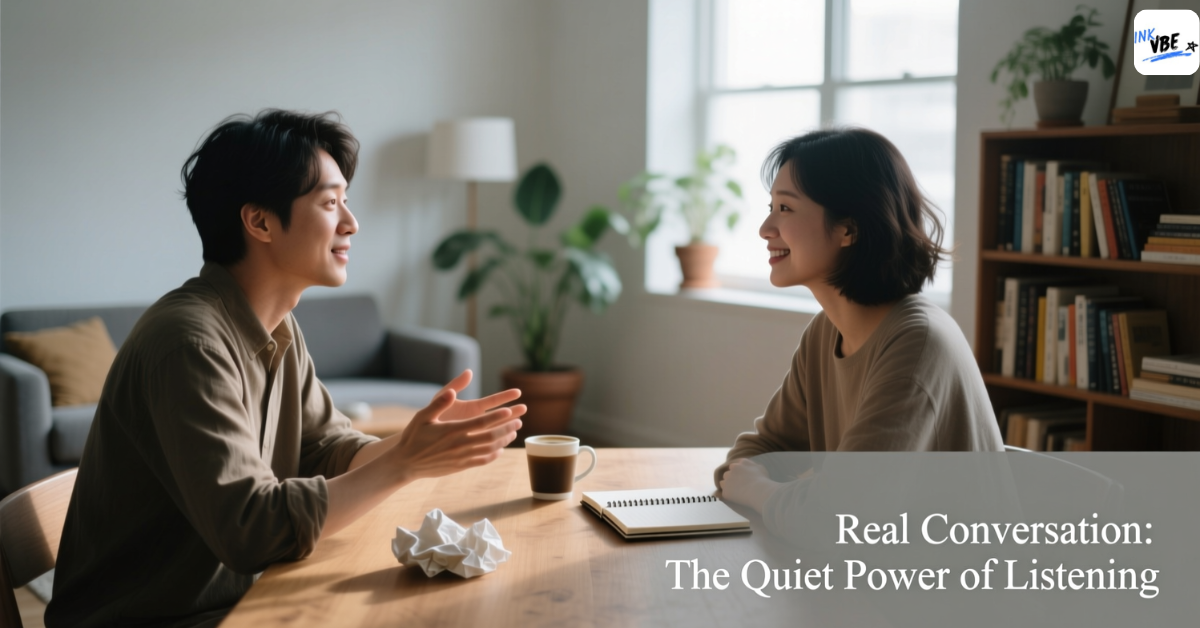

You know what’s weird? We live in a time when everyone’s chasing wellness—green smoothies, 5 a.m. yoga, wearable sleep trackers that judge you more than your mom—but somehow, we’ve forgotten one of the simplest, oldest, and most powerful tools for feeling better: talking. Not texting. Not sliding into DMs. Not even venting into a journal (though that’s great too). I mean actual, back-and-forth, eye-contact-if-you-can, “how’s your heart really doing?” conversation.
Let’s call it what it is: healthful chat.
Not therapy (though therapy is fantastic). Not small talk about the weather (though hey, even that has its place). But the kind of talk that leaves you feeling lighter, seen, maybe even a little braver. The kind that doesn’t show up on your Apple Watch, but quietly rewires your nervous system anyway.
Wait—Can Talking Really Be Good for You?
Short answer: absolutely. Long answer: it’s complicated, but yes—deeply, biologically, emotionally yes.
Think of your nervous system like an old-fashioned radio. When you’re stressed, it’s all static—crackling with cortisol, adrenaline, that low-grade hum of “what if?” But when you connect with someone who listens without rushing to fix you? That static softens. Your heart rate dips. Your shoulders drop an inch. You exhale like you didn’t even know you were holding your breath.
Science backs this up. Studies show that meaningful conversation can lower blood pressure, reduce inflammation markers, and even boost immune function. One famous study from the University of North Carolina found that people with strong social ties had a 50% higher chance of living longer than those who were socially isolated. That’s not a typo. Fifty percent. That’s on par with quitting smoking.
And yet—here we are. Scrolling. Swiping. Sending voice notes we hope will count as “connection.”
The Myth of “Busy” and the Death of Lingering Talk
Let me ask you something: when’s the last time you had a conversation that wasn’t interrupted by a notification?
We’ve convinced ourselves we’re too busy for real talk. But honestly? We’re not too busy—we’re just out of practice. And maybe a little scared.
Because healthful chat isn’t just about words. It’s about vulnerability. It’s saying, “I’m not okay,” and trusting the other person won’t flinch. It’s listening without mentally drafting your reply while the other person is still talking (guilty as charged). It’s resisting the urge to pivot to your own story the second there’s a pause.
Modern life doesn’t exactly encourage this. Our workdays are back-to-back Zooms. Our evenings are fragmented by TikTok spirals. Even our “social” time is often performative—curated Instagram stories, witty tweets, group chats that buzz but rarely go deep.
But here’s the thing: your brain doesn’t care how many likes you got. It cares whether someone looked you in the eye and said, “That sounds really hard.”
So… How Do You Do Healthful Chat?
Good news: it’s not about being a great conversationalist. It’s about showing up with curiosity and care. You don’t need a psychology degree or a perfectly lit podcast studio. You just need presence.
A few gentle nudges:
- Ask open-ended questions—and actually wait for the answer. Instead of “How was your day?” try “What surprised you today?” or “What felt heavy this week?”
- Listen to understand, not to respond. This one’s hard. Our brains love jumping ahead. But try pausing for two full seconds after someone finishes speaking. You’ll be amazed what comes up in the silence.
- Share something real—even if it’s small. You don’t have to bare your soul. Just name a feeling: “I’ve been feeling kind of scattered lately,” or “I’m weirdly proud of myself for cooking dinner three nights this week.”
- Put your phone away. Seriously. Face-down doesn’t count. Out of sight, out of mind. Because nothing kills connection faster than the phantom buzz of a notification.
And if you’re thinking, “But I don’t have anyone to talk to like that…”—you’re not alone. Loneliness is at epidemic levels in the U.S., especially among young adults and older folks. But connection is a muscle. It gets stronger with use.
Start small. Text a friend: “Hey, I’ve been thinking about you. Want to grab coffee and actually talk—not just scroll together?” Or join a hobby group—book club, hiking crew, pottery class—where conversation happens naturally alongside doing something else.
The Quiet Magic of “Ordinary” Connection
You don’t need dramatic confessions or tearful heart-to-hearts for chat to be healthful. Sometimes, it’s the mundane moments that stitch us back together.
Like the 10-minute chat with your barista who remembers how you take your coffee.
Or the walk with a neighbor where you both admit you’re dreading the upcoming winter.
Or the late-night kitchen-table talk with your sibling about nothing and everything—childhood memories, weird dreams, that one teacher who changed your life.
These aren’t “big” moments. But they’re glue. They remind us: I’m not alone in this.
And in a world that often feels like it’s spinning too fast, that reminder might be the most healing thing of all.
What If You’re the One Who Needs to Be Heard?
Here’s a truth we don’t say enough: it’s okay to need someone.
Asking for support isn’t weakness—it’s wisdom. But if you’ve been burned before (and who hasn’t?), it’s understandable to hesitate. Maybe you’ve shared something tender and gotten a shrug, a quick fix, or worse—judgment.
If that’s you, try starting with low-stakes vulnerability. Test the waters. Say something like, “I’ve been carrying something heavy, and I’m not sure I can hold it alone. Would you be open to listening?”
And if the person isn’t ready—or capable—that’s about them, not your worth.
If you don’t have a safe person in your life right now, consider professional support. Platforms like Open Path Collective offer affordable therapy (some sessions as low as $30). Or try support groups—7 Cups, The Trevor Project (for LGBTQ+ folks), or local community centers often host free or low-cost circles.
You deserve to be heard. Full stop.
The Ripple Effect of a Single Good Conversation
Ever notice how one good talk can change your whole day?
You walk away feeling clearer, calmer, more grounded. And that energy doesn’t just stay with you—it spills over. You’re kinder to the cashier. More patient with your kid. More willing to take that walk instead of doomscrolling.
Healthful chat is contagious. When you offer someone your full attention, you give them permission to do the same for someone else. It’s a quiet rebellion against the isolation our culture normalizes.
And honestly? We need more of that.
Let’s Bring Back Lingering
This fall—yes, right now, as the leaves turn and the air gets crisp—try something radical. Put your phone in another room. Make a pot of tea. Call someone you haven’t spoken to in a while. Or sit with a friend and just… talk. No agenda. No performance. Just two humans, sharing space and sound.
You might be surprised how much better you feel—not because you solved anything, but because you remembered: connection is medicine.
And the best part? It’s free. It’s always available. And it works whether you believe in it or not.
So go ahead. Reach out. Say the thing. Ask the question. Listen like it matters—because it does.
After all, wellness isn’t just what you eat or how many steps you log. Sometimes, it’s just showing up—with your whole, messy, tender self—and saying, “Hey. I’m here. How are you—really?”
That’s healthful chat. And honestly? It might just save your life.